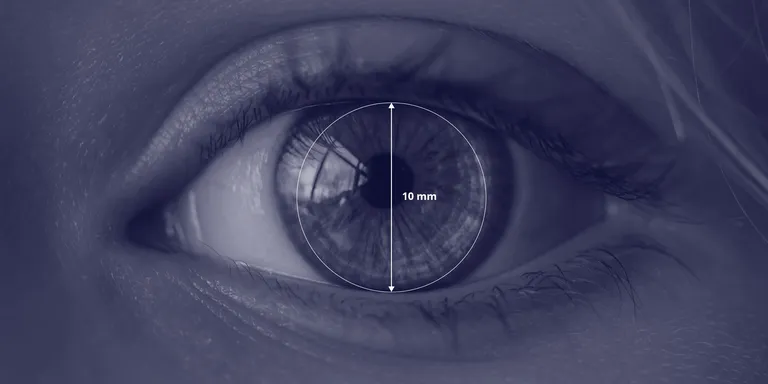



Early diagnosis of Alzheimer’s Disease is very difficult because current diagnostic methods such as neuroimaging and lumbar puncture are quite invasive, expensive and time consuming. In contrast, eye tracking offers a non-intrusive, quick and potentially low cost screening tool. Eye movements and cognitive alterations occur at early disease stages and can be gauged through simple, time-efficient eye tracking tasks.
Four Eye-Tracking Methods for Assessing Alzheimer’s
1. Fundamental Eye Movement Assessment
- With basic eye movement task, we can collect fixation, saccades, smooth pursuit (tracking moving objects) of a participant.
- And people with Alzheimer’s tend to show – Shorter Fixation Duration, More intrusive or erratic saccades, Difficulty following smoothly moving targets.
- Studies have shown these metrics can classify Alzheimer’s patients with up to 95% accuracy in controlled experiments.
2. Executive function assessment – antisaccade task
- The antisaccade task measures inhibitory control. In this task, a participant has to inhibit a saccade toward the target and make a saccade in the opposite direction.
- Key Findings: Healthy individuals typically make antisaccade errors in 20% of trials, while individuals with AD between 50-80%.
3. Advanced viewing behaviour assessment
- Along with changes in basic eye movements, individuals with Alzheimer’s disease (AD) experience difficulties in advanced visual perception scenarios, such as visual search and scene exploration.
- Visual search is a goal-directed search behaviour aimed at finding a target among distractors.
- Individuals with AD showed:
- Longer response times in visual search tasks
- Disorganized search patterns
- Difficulty in finding important objects
:quality(80))
Individuals with Alzheimer’s take longer to find a target in a visual search task, their search patterns are more disorganized, and they have difficulties detecting salient objects.
4. Reading assessment
- Individuals in an early AD stage read fewer words per fixation and show an increase in total number and duration of fixations compared to healthy individuals.
- Moreover, AD patients read more slowly, re-read text more frequently, and are less likely to skip uninformative sections compared to healthy individuals.
Conclusion
Increasing research-based evidence shows that people in early Alzheimer’s stages display measurable alterations in basic eye movements and cognitive functions. In this article, we have highlighted a few simple and quick eye tracking tasks which could aid the early Alzheimer’s screening process. Overall, eye tracking could serve as a nonintrusive dementia risk assessment tool for volume screening in primary care centers. With further development and research, eye movement metrics may become reliable biomarkers for AD that could complement other neuropsychological and physiological measurements.
If you’d like to dive deeper into any particular study or point, feel free to ask us at parag@tidentech.com or tidentech@gmail.com or call us on +91 9987442274.